
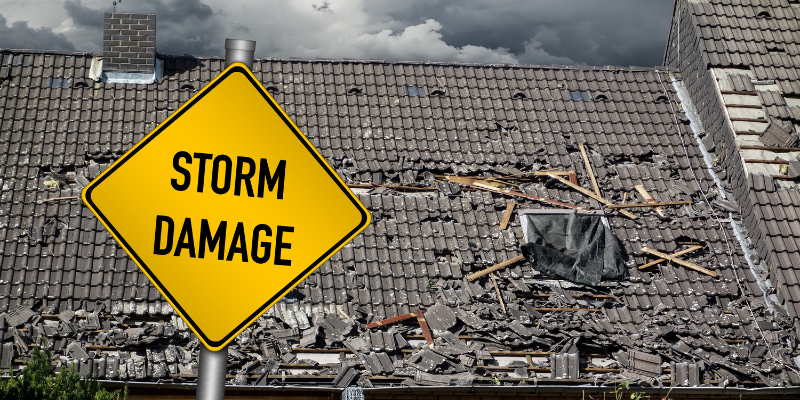
The tarp is the tell. Drive the older side streets around Tacoma a few months after a bad storm, and you’ll spot them. Blue plastic stapled across a ridgeline, weighted with scrap lumber and cinder blocks. Some went up the week the wind came through and never came down. A tarp is supposed to be a two-week fix. I’ve bought houses where it sat up there for a year.
When it becomes a two-year fix, the house has stopped being a repair project. It’s a decision now. Sell the storm-damaged house fast for cash, or keep waiting on contractors and adjusters.
A real storm isn’t a normal wet week. Flooding pushes people out of their homes, wind takes roofs and trees with it, and the county stands up a damage reporting line that stays busy for months. Plenty of that damage never gets covered. Some owners are still fighting an adjuster. Others are staring at a repair bid bigger than what’s left on the mortgage.
I’ve bought houses like these for years. Plenty of them had water stains on the ceiling and a chainsaw leaning against the garage. What follows is a straight walk through your options, what a cash sale fixes, and what it doesn’t.
Can Selling a Damaged House Fast Solve a Time-Sensitive Situation?
“How long can I sit on this before it gets worse?”
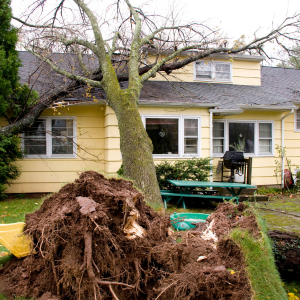
Almost everybody asks me that first. The weather answers it, not you. Whatever the Puget Sound winter hands out (a long rainy stretch, freeze and thaw, another windstorm off the water), the clock belongs to the sky. A roof that’s merely compromised in September becomes a mold remediation job by January, because moisture keeps moving through sheathing and drywall while you wait on a contractor callback.
Storm damage compounds in a way fire damage usually doesn’t. Wind lifts shingles. Rain finds the gap, water tracks sideways along a rafter, and the stain shows up in a bedroom twelve feet from the hole. The damage runs on a different clock when flames are involved, which is why selling a fire-damaged house in Washington is its own conversation.
Crawlspaces are where this gets expensive quietly. Plenty of older housing stock sits on post-and-beam over dirt. Once groundwater or a failed downspout puts standing water under there, it doesn’t stay put. It rises into the floor joists, insulation sags and drops, and the smell reaches the living room before anyone opens the access hatch. Haven’t looked under your house since the storm? Go look. Bring a flashlight and photograph whatever you find.
Time your insurance claim carefully. The rules favor you more than most homeowners realize. Washington puts a clock on your insurer: one window to acknowledge your claim, another to finish investigating and either pay or deny. The Washington State Office of the Insurance Commissioner publishes both, along with your rights as a policyholder, and those usually include an appraisal process when you and the company disagree on the amount of your loss. If your adjuster has gone quiet past those marks, say so in writing.
Build the paper trail while you wait. Photograph every room before anyone touches anything, then keep receipts for tarps, fans, dehumidifier rentals, and the guy who hauled the limb off your roof. Most insurance policies expect you to take reasonable steps to stop the damage spreading, and those mitigation costs are often reimbursable. Keep a log of who you spoke to and when. I’ve watched claims stall for months. That log ends up being the most useful document you own.
Now run the calendar math on a listing. Pull your own market’s median days on market, then set it next to the same month a year ago. Add the month a financed buyer needs for appraisal, underwriting, and closing. You’re looking at roughly two and a half months from sign in the yard to money in your account, assuming nothing breaks.
Something usually breaks on a damaged house. No conventional mortgage lender funds a property with an open roof or standing water underneath. The appraiser flags it and the loan stalls until repairs happen.
A young couple called me about a small rambler they’d inherited into landlord duty without wanting the job. Both of them had already moved out of state for work. A windstorm had dropped a limb through the carport. Their tenant moved out mid-lease, so they were covering a mortgage on an empty house and chasing rent they’d stopped believing in. They told me on a Tuesday they were done. Neither of them had to drive back from where they’d relocated.
Time-sensitive doesn’t only mean foreclosure. A job transfer with a hard start date counts. So does a divorce decree with a division deadline, or an estate that has to split proceeds among siblings who can’t agree on a contractor. If a lender has already begun default proceedings, your timeline belongs to somebody else. Your loan servicer or a HUD-approved housing counselor can tell you where you actually stand.
How Do I Sell My House Fast for Cash?
Most storm-damaged houses have no business on the open market.
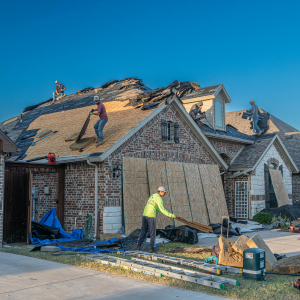
I’ll defend that. Listing works beautifully for a clean house in a tidy neighborhood with a new roof. Put a tarped, musty property in front of retail buyers, and you get thin traffic and nervous lenders. Then inspection renegotiations. Then a price that drifts down every two weeks until it lands under what a direct buyer would have paid on day one.
The process is short. Gather your claim number, the adjuster’s estimate if one exists, any contractor bids, and photos from before the damage. Nobody expects a binder. A phone full of pictures and a rough account of what happened gets you a real number.
Two more things help. Your most recent mortgage statement, so everyone knows what has to be paid off, and your county property tax statement. Disclose any second mortgage, HELOC, contractor lien, or old judgment early. None of those kill a sale on their own. Surprises in week two do, because they shove the closing date, and a shifted date turns a calm transaction into a stressful one.
From there, a buyer walks the property, or does a video walkthrough if you’re out of state. Offers should arrive in writing within a day or two. You pick a closing date that fits your life, escrow opens with a local title company, and the title work runs while you decide what to take with you. Many direct buyers will also let you stay after funding, rent-free. Your move doesn’t have to land on the wire transfer date.
A few things I’d insist on. Get the offer in writing before anyone asks you to sign an exclusivity agreement. Verify the buyer closes through an escrow or title company licensed in your state. Ask whether the contract can be assigned, because an assignable contract means the person in your living room may not be the one who ends up buying. We close with our own funds and won’t shop your house around behind your back.
Proof of funds matters too, and read what you get. A bank statement or a letter from a lending partner is normal. A screenshot with no institution name on it is not. Ask how much earnest money goes into escrow and how long the inspection window runs. A buyer who wants a long feasibility period on a house he’s already walked is leaving room to come back lower. Ask why he needs it.
Selling as-is doesn’t cancel your disclosure duty, and that trips up sellers more than anything else. Nearly every state requires a written seller disclosure form, and it asks what you know about the property, including water intrusion and structural issues. States differ on when the form has to reach the buyer and how many days the buyer then gets to back out. Your escrow officer or a local agent can tell you which version applies and what the deadlines are.
Tell the truth on the form. Write down the leak, the date, the tarp, the mold you saw. “Don’t know” is a legitimate answer when you don’t, and it’s far safer than guessing at something you never inspected. If you inherited the house and never lived in it, disclose that. Nobody expects an heir to know when the water heater was replaced.
Cash closings run through the same escrow setup as financed ones. You’ll sign at a title office or with a mobile notary, the deed records with the county, and funds wire out. What disappears is the appraisal, the loan underwriting, the repair addendum, and the buyer whose financing collapses ten days out. Out-of-state sellers get a mobile notary wherever they are. Bring ID matching the name on title. If you’ve married or changed your name since you bought, tell escrow early.
What Services Do Cash Home Buyers Offer?
A big maple came down through the back bedroom of a bungalow one November. The owner spent four months getting nowhere with two contractors. We closed in under two weeks with the stump still in the yard.
That’s the core service: buying the property in its current condition, debris and all. No cleanout, no dumpster rental, no hauling your grandmother’s furniture to the transfer station. Leave the inoperable car in the driveway, the paint cans, the freezer that stopped running. Documents and photographs are worth a careful pass, because nobody else will know what they are. Take the jewelry and the tools you use, then let the rest go. Sorting a garage costs families months they don’t have.
Beyond the as-is sale, most reputable buyers cover standard closing costs and pay for title work. Flexible dates are normal. If your new place doesn’t close until the fifteenth, closing waits until the fifteenth. Geography doesn’t change that either, so a homeowner working with cash home buyers in Bellevue gets the same latitude on dates.
Emergency stabilization is where a good buyer earns their keep. Getting a tarp crew out during a windstorm is close to impossible, since every roofer in Pierce County is booked at once. Homeowners calling cash home buyers in Puyallup run into the same wall. Buyers with standing relationships can often get someone out fast, which limits further water damage between contract and closing.
Occupancy gets handled too. If a tenant is still under a lease, or a relative moved in during the chaos and hasn’t moved out, raise it before signing. Tenant protections follow the property in most states, so an experienced buyer builds the timeline around them. Same goes for a code enforcement letter or an open permit. Hand those over. They’re solvable, and hiding them only delays the solving.
Title and probate coordination gets overlooked on inherited storm-damaged properties. Estates, missing heirs, old liens, and unrecorded contractor claims all surface in the title search. An experienced buyer works those out with the escrow officer instead of walking.
Flood zone properties need their own conversation. If your house sits in a mapped Special Flood Hazard Area, federal law requires flood insurance on any structure carrying a federally backed mortgage. Check your designation on the FEMA Flood Map Service Center. Rebuilding adds a wrinkle. Local floodplain rules generally say that once repairs and improvements to an older nonconforming structure pass half the structure’s value, the whole building has to meet current code. Some jurisdictions add those costs up over several years. You start with the roof, then the electrical panel has to move, then somebody mentions the foundation. Ask the permitting counter how they calculate that threshold before the first permit goes in. City and county rules differ, so confirm with whichever office actually issues your permit.
Worth checking on the upside: many communities take part in FEMA’s Community Rating System, which cuts flood insurance premiums for property owners inside them. Your floodplain administrator can tell you whether yours participates and what the discount runs.
Some buyers handle insurer coordination as well. If a claim is open and unpaid at closing, who receives the proceeds becomes a negotiated term of the purchase agreement. It depends on your policy language and whether your lender is named on the check. Get your insurer to confirm in writing before you sign, and make sure the contract says which party keeps what. Our team at Highest Offer Real Estate will structure it either way, whether you keep the claim and sell for less or assign it and sell for more.
One detail surprises almost everybody. If your lender is named as a payee, the check usually can’t be cashed until the servicer endorses it, and servicers typically release funds in stages tied to completed repairs. Selling instead of repairing? Call the servicer and ask how they handle that. Five minutes on the phone tells you which version makes sense.
What Are Clients Saying About Selling Their Home for Cash?
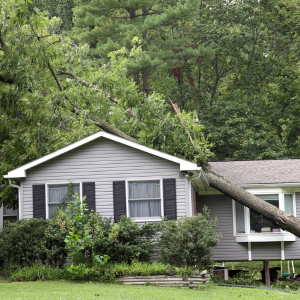
People call me braced for an insulting number. They’ve read that cash buyers pay pennies, and they’ve half decided to hang up.
The conversation turns fast, because the comparison that matters isn’t list price against cash offer. It’s net proceeds against net proceeds. A listed house carries line items nobody puts on the yard sign. Agent commissions on both sides. The roof replacement a lender demands, a mold remediation invoice, a price reduction after 30 days. Every mortgage payment you make while the house sits.
Do that math on paper first. Write the list price at the top. Subtract commissions, the repairs a lender will insist on, the holding costs, and whatever the inspection negotiation costs at the end. Put the cash offer beside it. Sometimes listing still wins by a wide margin, and I say so when it does. Most sellers have never written that second column down.
Relief is the part sellers tell me they underestimated. Not the money. The end of contractor bids, adjuster voicemails, and a house they couldn’t walk into without their stomach dropping. Showings disappear too. A damaged house is humiliating to show. You clean around a stain that won’t clean, you apologize for the smell, and strangers photograph your ceiling.
Then there’s certainty. Look at how many listings around you have already taken a price cut, because that share tells you what the market is doing better than any headline. Move-in ready houses still do fine. Damaged ones sit, and the seller absorbs the wait.
So which do you want, a higher number on paper that might arrive in four months, or a firm number that funds this month? There isn’t a universally right answer. For a homeowner with time, savings, and patience, listing usually wins. For someone carrying two housing payments with a tarp flapping in a windstorm, it doesn’t.
How to Vet the Buyer Making the Offer
The complaint I hear most about cash buyers is the tire-kicker problem. Somebody floats a big number over the phone, gets the property under contract, then renegotiates after an inspection he should’ve done first. Ask how many closings a buyer completed in your county last year, and whether he’s ever reduced a price after mutual acceptance. Who’s funding this? Can you speak with the escrow officer he normally uses? A buyer who has closed on storm-damaged property nearby answers all of that without pausing. One planning to flip your contract gets vague fast.
An heir living a few states away came to me after two agent listings expired without an offer. Wind damage to the north-facing siding had gone years without attention. Her garage was packed floor to ceiling with fishing gear and boat parts. She’d spent nine months hoping a retail buyer would look past it. We bought it with the gear inside, and she flew home the next week.
Frequently Asked Questions
Whatever part of town your house sits in, these four questions come up in nearly every call I take.
How Long Am I on the Hook for Repairs After I Sell My House?
Once the sale closes, your duty to deliver the disclosure statement ends, along with the buyer’s related rights under your state’s disclosure law. What survives is liability for anything you knowingly concealed or misrepresented, and that can follow you well past the closing date. Selling as-is to a cash buyer doesn’t erase it. That’s exactly why an honest disclosure form is your best protection. Write down what you know about the leak, the flooding, and any repair that went unpermitted.
How Much Value Does Water Damage Strip Out of a House?
Far less depends on the stain than on what sits behind it. Cosmetic marks from a roof leak somebody already fixed might barely move a price. Active intrusion, a saturated subfloor, and visible mold are different, and a retail offer drops hard once a lender, an inspector, and an insurance adjuster get involved. Buyers discount for uncertainty, so a documented, remediated leak with receipts appraises better than a mystery stain. If the damage is ongoing, the discount grows every wet month you wait. There’s a fuller breakdown of the numbers in this guide to selling a house with water damage in Washington.
What’s the Number One Reason a House Doesn’t Sell?
Price relative to condition, nearly every time. A property fails on the market when it’s listed at a number that assumes repairs the seller never made, and buyers can price a roof themselves. Poor marketing, restrictive showing windows, and a disclosure surprise mid-escrow all contribute. The underlying issue is usually a seller anchored to what the house would fetch fixed rather than what it’s worth today.
Is a House in a Flood Zone Hard to Sell?
Harder, not impossible. A buyer using a federally backed loan has to carry flood insurance if the structure sits in a mapped high-risk zone, and that premium changes his monthly mortgage math before he makes an offer. An elevation certificate, past claim history, and documented mitigation work keep sales from dying in the last week. Cash buyers care less about the designation, since no lender is imposing the requirement.
If you’ve got a damaged house and you’re not sure whether to repair it, list it, or just be done, I’m happy to walk through the numbers with you. Reach out to Highest Offer Real Estate for a straight assessment of what your property is worth in its current shape. If listing turns out to be the better move, I’ll tell you that too. No pressure, no obligation, no tarp required.