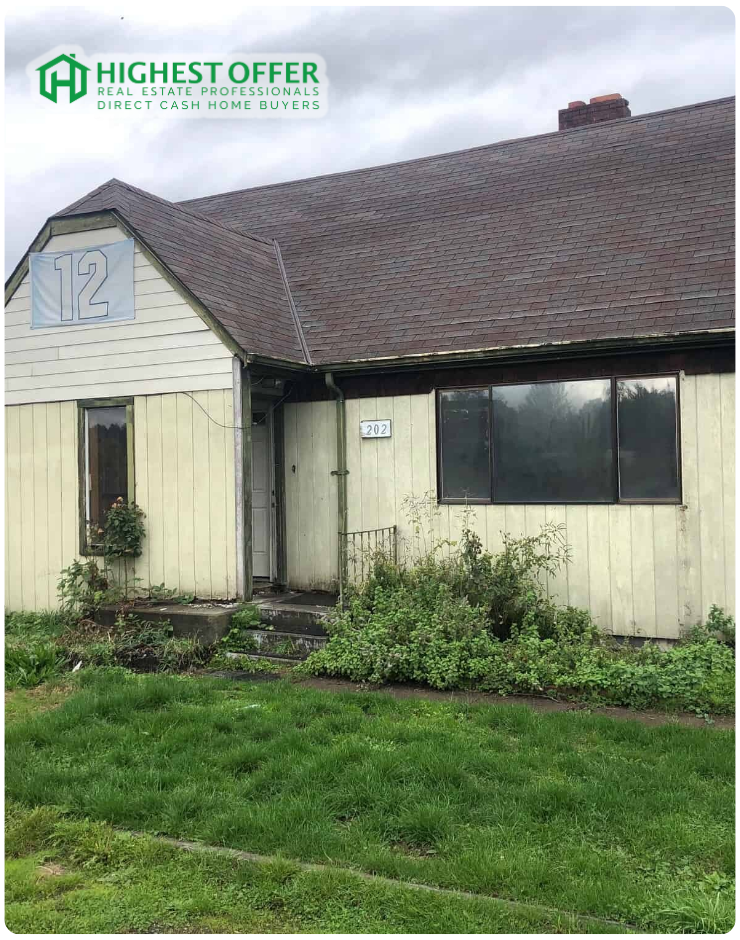

Three siblings inherit a house near Broadway in Everett. Two want the money. The third sleeps in the back bedroom and quits answering his phone. Washington has a legal fix for that standoff, and the honest timing on a forced sale runs six months to two years from filing to closing.
A few cases settle in ninety days. Others crawl past two years because an heir can’t be found, or because nobody wants the property until the roof gets replaced. I’ve seen cases go both ways, and the difference usually shows up within sixty days of the first lawyer’s letter. Filing suit isn’t the only way out of shared ownership.
What Is a Real Estate Partition Action Under Washington Law?

A partition action is the bluntest tool in Washington property law, and co-owners wait far too long to pick it up.
Under chapter 7.52 RCW, when several people hold and possess real property as tenants in common, any one of them can sue for partition according to each owner’s rights. That includes a sale of the property if it can’t be divided without great prejudice to the owners. No majority vote is needed. One owner with a minority interest can start the whole machine.
People who’ve been told they need everybody’s signature to sell find that surprising.
Whoever files is the plaintiff. Every other co-owner becomes a defendant. The plaintiff may also name creditors holding non-judgment liens as defendants, and before any sale is ordered, the court can require that those creditors be added. Judgment lienholders get their own notice to appear and prove what they’re owed. You’d file in superior court in the county where the land sits, which here means Snohomish County Superior Court in Everett, King County in Seattle, or Pierce County in Tacoma.
What the court decides isn’t whether you can exit. It decides how.
Judges in Washington have two basic outcomes: divide the dirt, or divide the dollars. Partition in kind works for a forty-acre parcel outside Monroe with two road frontages. It fails for a single-family house on a 7,200-square-foot lot in Shoreline, since you can’t saw a kitchen in half without wrecking the value for everybody. When dividing causes that kind of harm, the court orders a sale and splits the proceeds by ownership interests.
Before you call an attorney, understand this. A partition action isn’t a fight you win or lose. It’s a case the court supervises. Filing first doesn’t earn a bigger share, and the holdout doesn’t get punished for being difficult. Your percentage is your percentage, adjusted for who paid the property taxes and who collected the rent.
What Causes an Inherited Property Dispute Between Co-owners?
I used to chalk these fights up to greed. The real fuel is almost always unequal caretaking.
One sibling drove Mom to dialysis for four years while another sent a Christmas card from Arizona. Both inherited a quarter interest in the property, and the statute treats them identically. That asymmetry sits under maybe seven of every ten inherited property disputes I get called into, and it never shows up in the pleadings. Plenty of these houses are still working through the estate, and selling a probate property in Washington runs on the court’s calendar, not the family’s.
Money piles on from there. Somebody pays the property taxes, the insurance, the sewer bill, the leak under the crawlspace. When one co-owner carries that alone, they start keeping receipts, and rightly so. Washington courts can order an accounting between co-owners, crediting the owner who paid and debiting the one who didn’t. Save every invoice from day one.
Last year I bought a rambler in Lake Stevens from three adult children whose father had just moved into assisted living in Marysville. His woodworking shop still filled the garage, down to the table saw and two hundred clamps, and none of the three owners could agree on who should haul it out. We walked the property on a Tuesday and closed on the house without anybody touching a clamp.
Then comes the argument over who actually lives there. One co-owner lives in the house rent-free while the other co-owners are landlords who never get paid. Have you ever tried telling a brother he owes his sisters rent on the house he grew up in? It goes about how you’d expect.
Liens on a co-owner’s share make things worse fast. An heir with a tax lien, a defaulted credit card judgment, or unpaid child support drags creditors onto the title, and those creditors get a seat at the table.
Second marriages, unrecorded promises, a will nobody can find, a co-owner who borrowed against his share. None of it stops a sale in Washington. It just decides who gets what, and how many months the partition takes.
What Are the Different Types of Partition Actions in Washington?
No, a judge isn’t going to hand you the back half of a Lynnwood lot and call it even. That’s the objection I hear most, and it reflects a real risk under the old statute, which is why the newer law exists.
Partition in kind means physical division. RCW 7.52.080 has the court appoint three referees for that, and they divide the property and allot portions to the parties with quality and quantity both weighed. Rural acreage, timber ground in Lewis County, a subdividable parcel near Arlington: those are the candidates.
The other path is partition by sale, which is what most people mean by a forced sale. That same section lets the court order a sale and appoint one or more referees when splitting the land would cause great prejudice. Under the old chapter, referees sell at public auction to the highest bidder, handled like a sale on execution. Auctions have a long history of disappointing prices. So courts have used their discretion to allow listed, open-market sales through a licensed real estate broker instead.
Then there’s the heirs property route, and it changed the math for families.
Washington adopted the Uniform Partition of Heirs Property Act as chapter 7.54 RCW, and it governs partition actions filed on or after July 23, 2023. It supplements the older chapter and replaces anything inconsistent with it. Property qualifies when no recorded agreement covers partition, at least one cotenant took title from a relative, and 20 percent or more of the interests or the cotenants trace back to family. Have a lawyer confirm your parcel. Under this chapter, the court fixes the property’s fair market value first, ordering an appraisal from a disinterested licensed Washington appraiser unless every cotenant agrees on a value.
This next provision is what saves families from the auction block. Under RCW 7.54.050, any cotenant who didn’t request a sale gets 45 days from the court’s notice to elect to buy out the ones who did. The price is the whole-parcel value multiplied by the selling cotenant’s fractional share. Once the court confirms an election, it sets a payment deadline no sooner than 60 days later. If the property still has to be sold, chapter 7.54 requires an open market sale unless sealed bids or an auction would serve the cotenants better. Referees under this chapter must be disinterested, impartial, and not participants in the action.
Which chapter governs your case shapes your partition timeline more than anything else.
Can You Negotiate a Property Buyout Before Filing a Partition Lawsuit?

A widow in Puyallup called me about a duplex she’d inherited with her late husband’s brother. He wanted to keep it, she wanted out, and they’d each spent around four thousand dollars on lawyers arguing over a number neither had bothered to have appraised.
Yes, you can settle this without a lawsuit, and you should try first. A negotiated buyout between co-owners beats a partition suit on cost, speed, privacy, and family relationships. That pattern has held every time I’ve watched it.
Get a real number before anything else. Not a Zestimate, not what a neighbor got in 2022. A comparative market analysis from a working real estate agent costs nothing and gives you a defensible range. A full appraisal usually runs $500 to $900 in Washington, and it carries more weight if things turn contentious. In the August 2026 NWMLS snapshot, the median sales price for homes and condos across its Washington service area was $635,000, down 2.3 percent from $650,000 a year earlier. Snohomish County came in at $724,500 that month and King at $845,000, so a “Washington median” tells you almost nothing about your block.
Once the owners read the same valuation, the math is arithmetic. Value minus mortgage payoff minus liens, times the exiting owner’s percentage, minus whatever the accounting says they owe for unpaid taxes or repairs. Write it down. Sign it.
Financing is where buyouts die. The owner who keeps the house has to qualify for a refinance big enough to cash out everyone else, and lenders look hard at inherited title that hasn’t cleared probate. I’ve seen handshake agreements collapse eight weeks later when underwriting came back short.
Estate mediators help more than families expect. Washington’s Trust and Estate Dispute Resolution Act gives parties in estate matters a right to mediate before formal court procedures. King County’s local rules push most civil cases into a settlement conference or other alternative dispute resolution anyway.
Sometimes nobody keeps the house, and that’s the cleanest answer. When all the co-owners would rather have cash than a shared asset, selling the whole property to one buyer removes the negotiation. That’s where we get called. Highest Offer Real Estate can give a group of co-owners one number in writing that each of them can take to their own attorney before anyone files anything.
What Does the Washington Partition Process Look Like, Step by Step?
Skip a step in the notice sequence, and you can lose a year. I watched a case reset because an out-of-state cousin with a 3 percent interest was never properly served as a party, and every order after that sat on shaky ground.
The partition complaint has to describe the property and state each owner’s interest as far as the plaintiff knows it. Co-owners who can’t be located get served by publication, which adds weeks and a legal notice bill.
Defendants answer. If somebody disputes the percentages, claims a right of survivorship, or argues the place is heirs property, the court settles that before it decides anything about a sale. Proof has to be taken even in cases where nobody’s fighting, because a judge can’t partition real estate on the pleadings alone.
The partition method comes next. Heirs property cases go to a court-determined value, then the buyout window, then a preference for dividing in kind unless that causes great prejudice to the cotenants as a group. Older-chapter cases head straight to in-kind division with three referees, or a forced sale with one or more.
Referees do the work assigned to them. The referee markets or auctions the property, gathers offers, and files a report. A referee also takes evidence on liens and reports which creditors’ liens are established, the amounts, their priority, and whether each claim is contingent or absolute. A lien doesn’t stop the transfer either, since you can sell a house with a lien in Washington as long as the payoff comes out of the proceeds at closing.
Confirmation is the hinge. The court can confirm the referee’s report, set it aside in whole or in part, or appoint new referees. Once confirmed, the order binds every party and the lien creditors who got proper notice.
Distribution comes last, and the court’s order of payment surprises people. The suit’s general costs come off the top, then the referee’s costs, then the liens by priority, with the mortgage among them. Whatever survives gets divided by ownership interest.
Escrow and recording close it out like a normal sale, except a court-appointed referee signs instead of you.
What Factors Affect Partition Lawsuit Timelines and Costs in Washington?
That stack of steps is where the months hide. Each one has a court calendar behind it.
A contested partition in King County can wait longer for a court date than the same case in Kittitas or Whitman County, and nothing you or your lawyer does changes that. Uncontested cases where all the owners sign a stipulated decree wrap up in a few months. Add a will contest, a disputed accounting, and an appraisal fight, and eighteen months stops looking pessimistic.
Legal fees follow the fight, not the property value. A partition where everyone cooperates costs a fraction of one with depositions and competing expert appraisers. Referee costs, publication, title work, and the appraisal all come off the property’s proceeds before anybody sees a dime.
Property condition drives timing more than sellers expect. A house with a failed septic system, deferred maintenance, or a hoard of belongings won’t attract financed buyers, and financed buyers pay retail. That matters when the statewide median days on market for sold homes sat at 21 days as of August 26, 2026, with a 98.9 percent sale-to-list ratio and roughly 25,600 active residential listings. Clean, updated houses move fast here. Neglected ones sit, and every month of sitting costs taxes, insurance, and utilities.
How many people are on title, and how many have lawyers? Five heirs with four attorneys generate four times the paperwork and four billing clocks.
Unknown or unlocatable cotenants stretch everything, and so do out-of-state cotenants who won’t sign without their own counsel.
The biggest cost lever isn’t legal at all. It’s whether the property sells on the open market with a broker, at a referee’s auction, or directly to a cash home buyer in Washington who takes it as-is. Each option trades price against certainty, and reasonable families pick differently.
Who Can Help You Resolve a Real Estate Partition Dispute in Washington?

Start with a Washington real estate litigation attorney, ahead of anybody else. Not a general practitioner. Ask whether they’ve handled cases under both partition chapters, because the heirs property analysis is newer and some lawyers still default to the old playbook.
The number a court is most likely to accept comes from a licensed real estate appraiser. A local real estate broker gives you the value the market is most likely to pay, and those two figures aren’t the same. Get both if the property is worth more than a few hundred thousand dollars, which in the Puget Sound region is most of them.
Title companies earn their fee on these properties. A preliminary title report shows every lien, easement, and clouded interest on the property, and I’ve had reports turn up decades-old judgments nobody in the family knew about.
If the co-owners agree on selling but can’t stomach repairs, staging, and showings, a cash buyer collapses the problem into one closing date. We buy houses in whatever condition we find them across Snohomish, King, and Pierce counties. We coordinate with the attorneys and escrow, so co-owners scattered across three states can each sign remotely. If the house sits on the Eastside, we buy houses in Bellevue and the rest of east King County on the same terms.
A landlord in Lakewood called me after his third eviction filing in four years on a small house he’d inherited with a cousin. His tenant’s abandoned camper sat in the side yard. We took the camper with the house.
Frequently Asked Questions
What Exactly Does a Forced Sale of Property Mean?
A forced sale is a court-ordered sale of real estate that happens without every owner’s consent. One owner petitions the superior court, the court decides that dividing the physical property would harm the owners, and it orders the property sold with proceeds split by ownership interest. Foreclosures and tax sales are forced sales too, but unpaid debt drives those rather than co-ownership, and the procedure looks nothing alike.
How Long Does a Partition Case Take in Washington?
Six months on the fast end, two years on the slow end. An uncontested case where the owners agree the property should sell, and they’re only arguing about how, can wrap up in a couple of court dates. Add a contested heirs property determination, an appraisal fight, and a buyout election that stalls, and you’re into the second year. Crowded court calendars in Snohomish and King County add weeks at every step.
Can One Co-owner Block the Sale?
Not permanently. A co-owner can slow a partition down, make the court test whether physical division works, and, under the heirs property chapter, can exercise a buyout right at appraised value. No co-owner can sit on the property forever against the wishes of someone who wants out. The right to partition is close to absolute in Washington, and courts don’t make the petitioning owner explain why.
Who Pays the Attorney Fees?
Usually the property does. Under RCW 7.52.480, the cost of partition, including reasonable attorney fees set by the court, gets paid by the parties in proportion to their respective interests. That shifts when litigation breaks out between only some of the parties, because the court can make those parties carry the expense of their own fight.
What If Someone Has Been Paying the Mortgage and Taxes Alone?
Keep the receipts. Washington courts adjust the distribution through an accounting, crediting an owner who covered mortgage payments, property taxes, insurance, and necessary repairs beyond their share. The same accounting runs the other way, charging an owner who lived in the house rent-free while everyone else paid the carrying costs. Bank statements and canceled checks settle these arguments. Memory doesn’t.
Do We Have to Go to Court at All?
No, and most families shouldn’t. A written buyout, a listing agreement all owners sign, or a direct sale to investor home buyers in Seattle accomplishes the same transfer without a judge. Court is the backstop for when talking has failed, not the first stop.
Talk Through Your Options Before You File
If you’re holding a share of a house you didn’t ask for, the conversations with your siblings or cousins probably keep ending the same way. Find out what your options look like before anyone files anything. We’re happy to walk through the numbers on the property and tell you what a cash sale would net each owner. We’ll point you toward a partition attorney if that’s the better path. No pressure, no obligation, and no hard feelings if you’d rather list it. Reach out to Highest Offer Real Estate whenever you’re ready, or just send us the address.
Helpful Washington Blog Articles
- How to Sell a House in Foreclosure in Washington
- How Long Can Seller Stay in House After Closing
- How to Sell Rental Property Without Paying Taxes
- How Long Does a Real Estate Contract Last in Washington
- Cost to List on MLS in Washington
- How Long a Forced Sale of Property Takes in Washington
- How to Sell an Apartment in Washington