

Getting behind on a Washington home loan is frightening, and having to sell the house at the same time can feel like one problem too many. Washington gives homeowners more room than most people expect, though. Most cases here run outside of court on a schedule the law spells out, and every stage of that schedule still leaves you choices. Whether you just missed a payment or a sale date is already on the calendar, your next move decides how much equity you keep. Below are the rules, the deadlines and the honest ways to sell a house in foreclosure in Washington before the trustee sale arrives. Know the timeline, get help early, and you’ll lose less of your home’s value and sleep better through the process.
Key Highlights
- Washington handles most foreclosures outside of court, and knowing which kind you’re in tells you how much time you have to sell.
- The Washington foreclosure process moves in set steps toward a sale, and the Notice of Default is the one that starts the clock on a home sale.
- A clean, well-prepared home draws better offers, even when the bank is already counting down to a trustee sale on your property.
- State law fixes the trustee sale dates. You can still talk to your lender and ask for more time while those dates run.
- Good preparation plus advice from a Washington attorney usually puts the most money from the sale back in your pocket.
Understanding Foreclosure Laws in Washington

If missed payments have you thinking about selling your house, start with how the foreclosure process works in Washington. Most home loans here are secured by a deed of trust, which lets the lender foreclose without filing a lawsuit. A trustee runs the process instead of a judge, and the steps and deadlines are written into state law. Homeowners who owe money should learn those rules before trying to sell a home, because every option you have depends on the date you’re on. The law also builds in protections, including mediation and a right to catch up on the loan. Those protections only help homeowners who use them, and a court will rarely step in on its own.
Key Aspects of Washington Law You Should Know
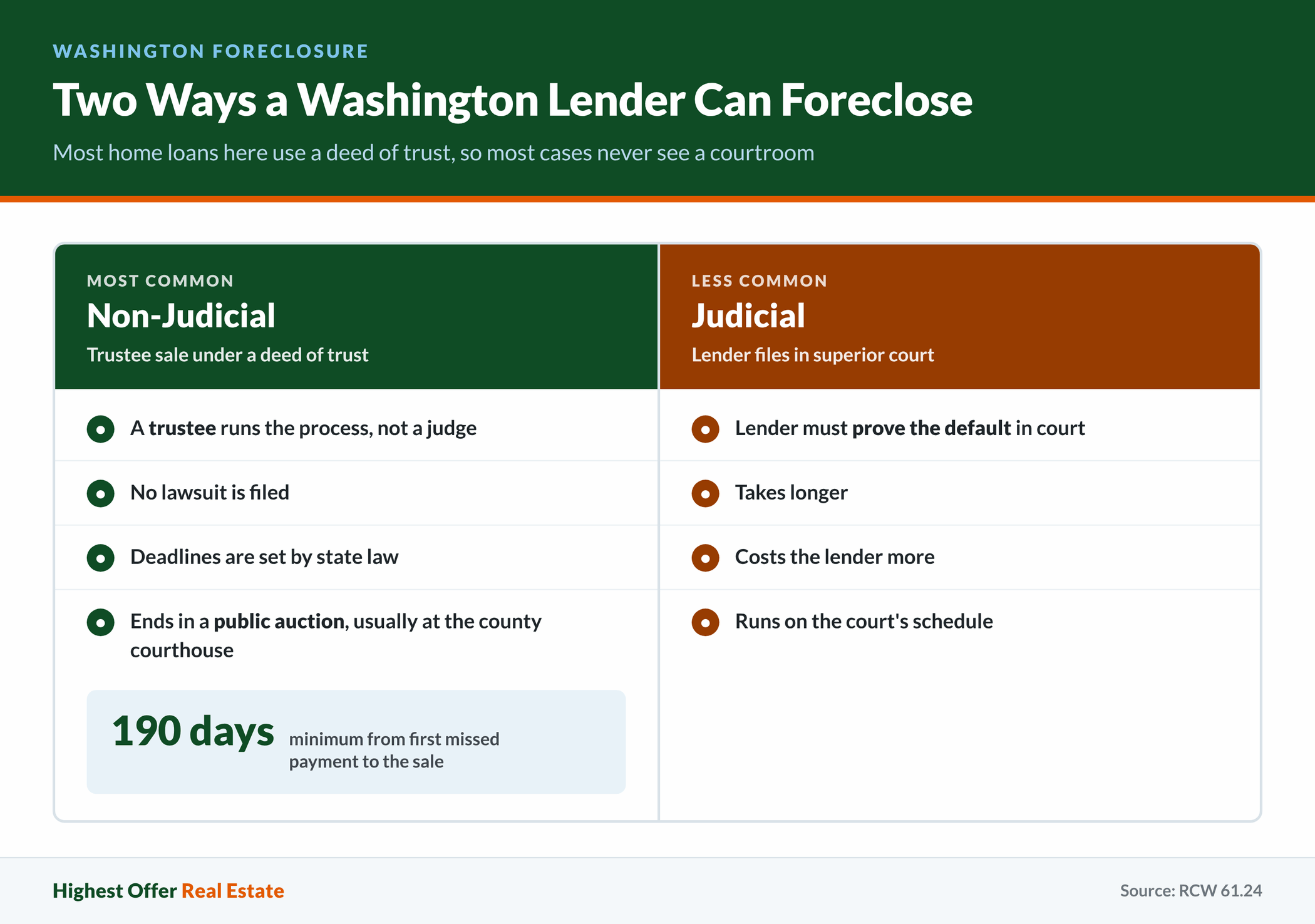
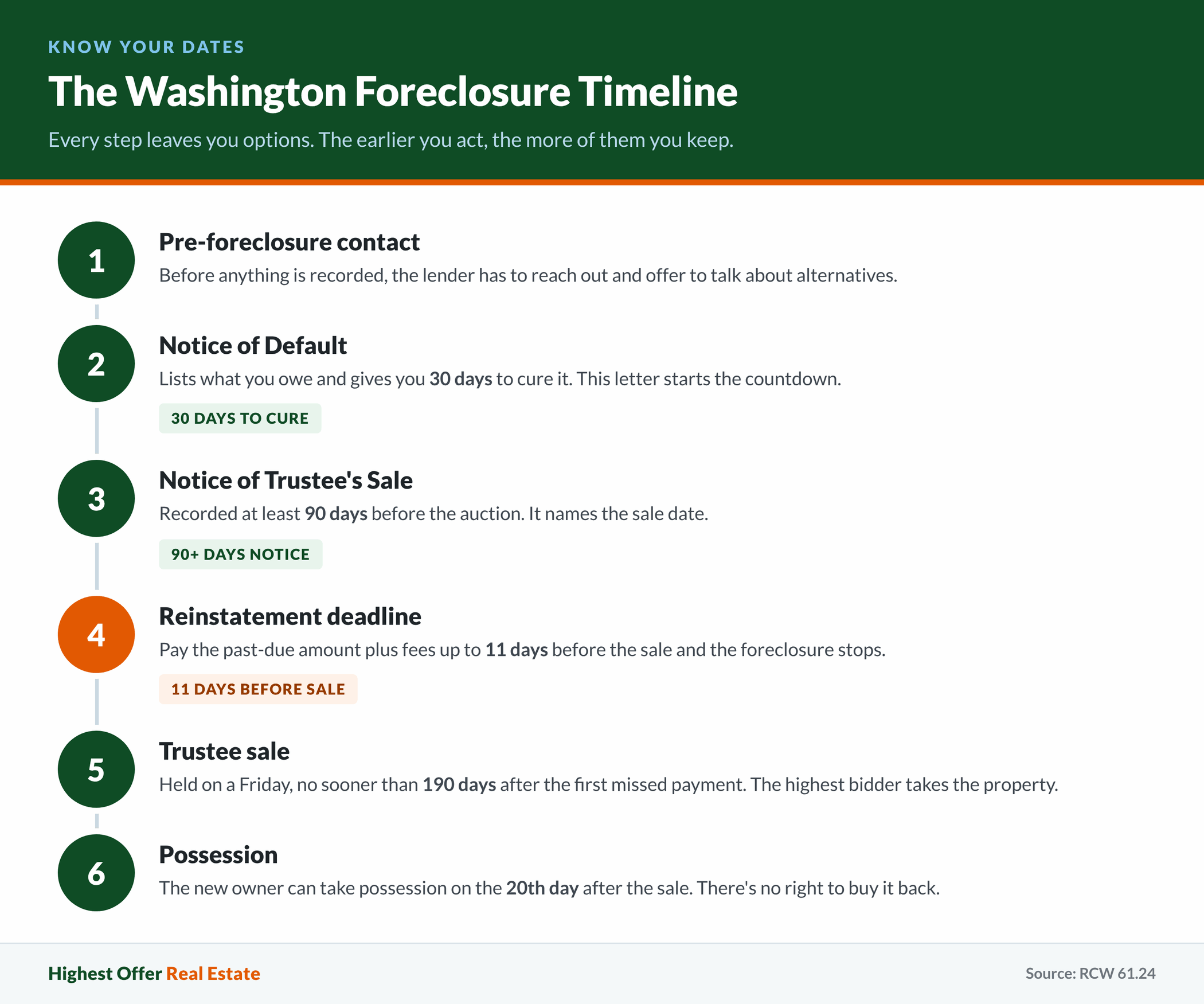
Washington’s foreclosure rules live in the Revised Code of Washington (RCW), chapter 61.24, often called the Deeds of Trust Act. A non-judicial foreclosure under that chapter never sees a courtroom. Before anything is recorded, the lender has to reach out and offer to talk about alternatives. Next comes a default letter, which gives you 30 days to cure what you owe. After that, the trustee records a Notice of Trustee’s Sale at least 90 days before the auction, and the sale can’t happen sooner than 190 days after your first missed payment. A judicial foreclosure is different. The lender files in superior court, has to prove the default, and waits longer and spends more to get there. You have real rights along the way. You can reinstate the loan by paying the past-due amount plus fees until 11 days before the sale. Another option is asking a housing counselor or attorney to refer you to the state’s Foreclosure Fairness Program for mediation. Talk to a foreclosure attorney or an experienced real estate professional early. They can read your paperwork, check each step and date, and help you decide whether to catch up, negotiate or sell. Washington homeowners who understand the process tend to make calmer decisions, sell for more and finish faster.
Steps in the Foreclosure Process
If you own property in Washington and want to sell your home for cash in Tacoma or anywhere nearby, the foreclosure timeline sets the pace for everything you do. Each step, from the first missed payment to a possible trustee sale on the courthouse steps, closes some doors and leaves others open. Knowing where you stand on that calendar is what lets you choose instead of react, and it helps you pick the right way to sell. Each stage of the process shapes the sale of your house differently, under Washington law and in the local home market, and you’ll want to sell before the last one.
How It Affects Your Home Sale
Everything starts with the default letter. It tells you which payments are missing and what it takes to cure them, and it starts a 30-day window before the lender can move to a sale. For a foreclosure that never goes to court, that letter is the most important piece of mail you’ll get, because the countdown begins with it. The Notice of Trustee’s Sale comes next. It names the auction date, and from then on your timing decides your options. A traditional real estate listing usually needs a few months from the day a sign goes up to the day the deed records, so a late start can leave you short. If you can’t close before the auction, the house goes to the highest bidder and any equity above the debt is handled by the trustee, not by you. Homeowners in Washington who are behind on payments can still ask the lender for a loan modification, a repayment plan or a short sale approval. A real estate agent or attorney can help you line those up with a sale date. Buyers who spot a recorded notice often expect a discount and push harder on price. Price the home fairly from day one and present it well, and you give yourself room to negotiate. Act early, sell on your schedule, and the process stays on your terms.
Preparing a House in Foreclosure for Sale
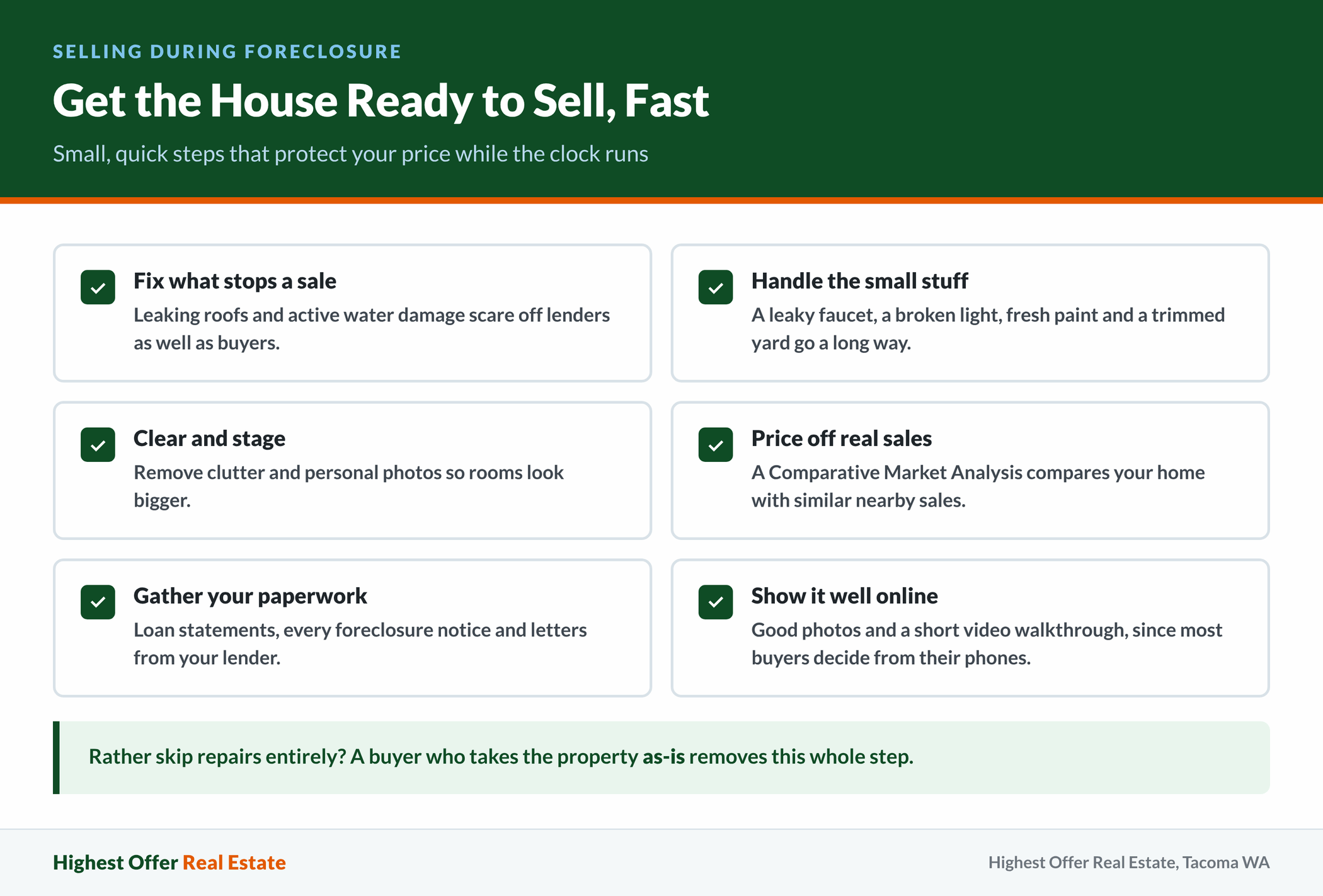
If you’re facing default in Washington and want to sell your home on the open real estate market, a little planning helps you draw more interest and a stronger price. Walk through the house and write down anything a buyer would notice in the first ten minutes. Homes in rough shape scare off financed buyers and pull offers down. Small fixes help you sell, and they go a long way: a leaky faucet, a broken light, a fresh coat of paint, a trimmed yard. Staging matters too. Clear out clutter and personal photos so rooms look bigger, and buyers can picture their own furniture there. Meanwhile, pull together your loan statements, every foreclosure notice you’ve received and any letters from your lender. Being upfront with buyers about the timeline earns trust, helps the house stand out in a crowded market, and keeps negotiations moving. Knowing exactly how many days remain before the auction also helps you pick a realistic closing date. Set a competitive price and lead your marketing with the home’s strongest features, and serious buyers tend to show up quickly. A Washington real estate professional who has handled sales like this can help you price the house, manage the paperwork, and keep the closing on schedule.
Highest Offer Real Estate can help you through each step and keep the process moving.
Exploring Trustee Sale Options

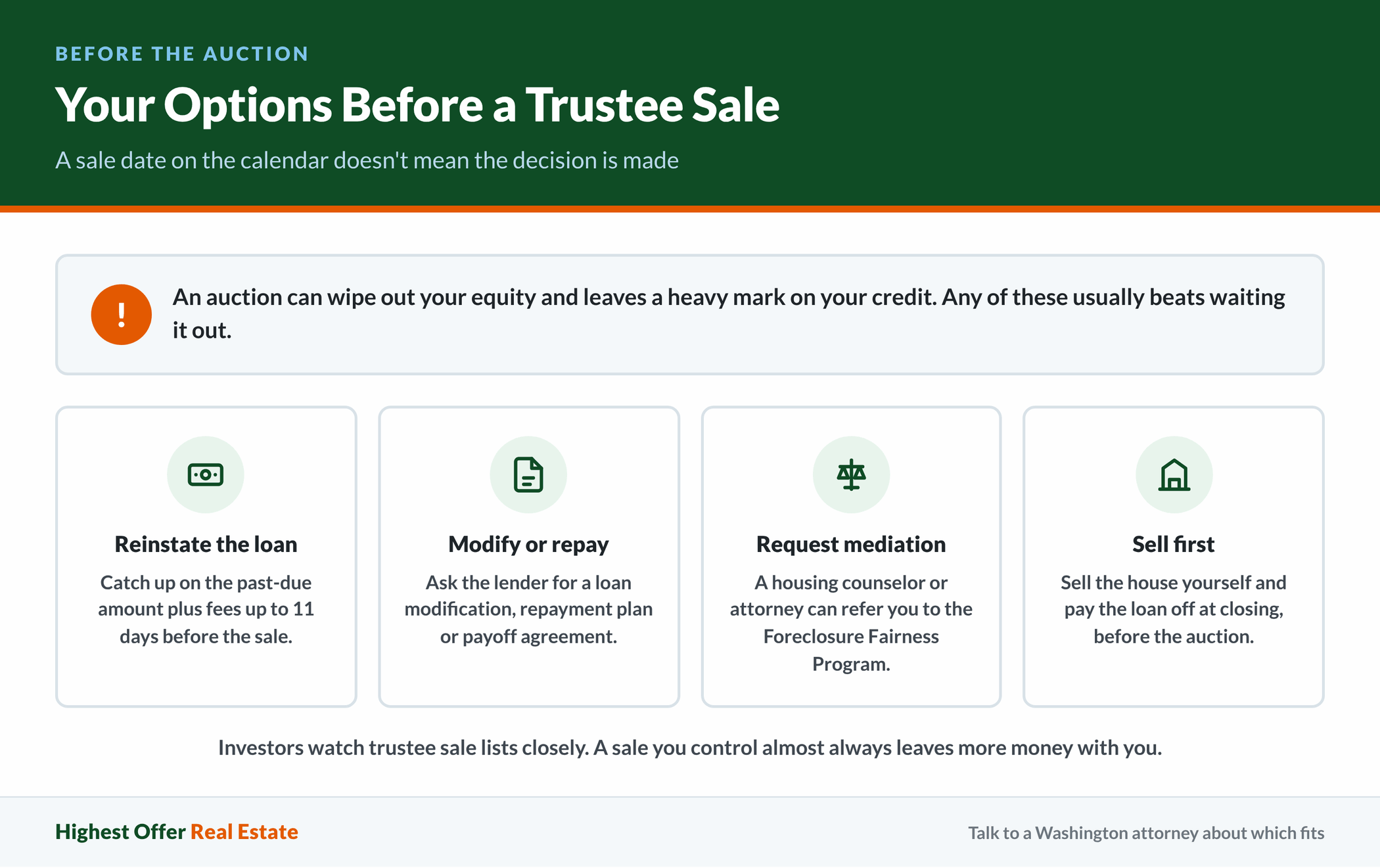
A trustee sale is the last step in a Washington case that never goes to court, and it moves fast once it’s scheduled. The trustee named in your deed of trust, not a judge, runs the auction. By law it happens on a Friday, usually at the county courthouse, and the property goes to the highest bidder. Often that bidder is the lender itself, bidding what it’s owed. After the sale, the new owner can take possession on the 20th day, and you have no right to buy the home back. Plenty of homeowners feel frozen once a sale date lands on the calendar. That’s the moment to move. Why wait for the process to finish without you? You can still reinstate the loan up to 11 days before the auction. You can work out a payoff or modification, or sell the house yourself and pay the loan off at closing. Selling first is the process most owners overlook. Any of those beats watching an auction take your equity. A trustee sale also leaves a heavy mark on your credit. Talk to a lawyer or real estate agent right away about which path fits your numbers. Getting help that week, not the next month, is what keeps the most options open. Investors watch trustee sale lists closely because auctions can mean below-market prices, so a sale before that date nearly always leaves more money with you. Get organized, get good advice and act while the calendar still gives you choices. A sale you control almost always closes faster and cleaner than one the auction controls.
How to Effectively Sell During Foreclosure
Want to sell a home in foreclosure quickly without giving away your equity? You need a plan. In Washington, the stage your foreclosure has reached shapes who will buy your house, how fast and at what price. A strong plan accounts for that stage, gets the house ready to show, and puts it in front of the right buyers.
If the property is part of an estate, a few more steps come into play. Selling a house in probate can require court approval, depending on the personal representative’s authority, and that changes the timing. Buyers sometimes see estate property as complicated, so clear paperwork and steady communication matter. A probate attorney and an experienced real estate agent can keep the estate in line with the law while the home stays competitive on the market.
Whether you’re facing foreclosure, probate or both, get advice from a lawyer and a real estate agent before you sign anything.
Tips to Keep Your Equity Before the Trustee Sale
Protecting your home’s market value starts well before the auction date. On the open market, curb appeal does a lot of the work. Fresh exterior paint, clean gutters and a tidy entry make a better first impression than any listing description. Fix the problems that stop a sale outright, like a leaking roof or active water damage, because those scare off lenders as well as buyers. If you’d rather skip repairs and sell your house for cash in Washington, a buyer who takes the property as-is removes that step entirely. Price matters even more than repairs when you need to sell a home in Washington. Ask an agent for a Comparative Market Analysis, which compares your home with similar ones that sold nearby in the last few months. In busy areas such as Seattle and Tacoma, a home priced right on day one often draws several offers. Overpricing does the opposite. Don’t do it. It burns weeks you don’t have, and the listing goes stale. Good photos and a short video walkthrough help too, since most buyers decide whether to visit from their phones. Be honest with buyers that there’s a loan to clear at closing, and let your agent manage that conversation. Keep your lender in the loop as well, because a lender can help more than most homeowners expect. They often agree to postpone the sale when a signed purchase agreement is in hand. Your attorney can help with a repayment plan or modification if selling turns out not to be the right move. Plan ahead, price carefully and watch the calendar. The selling process rewards owners who start early. That combination gets the most money out of a home sale under pressure.
Navigating the Foreclosure Market in Washington

Selling a home in Washington during foreclosure means working on two clocks at once: the market’s and the trustee’s. The Notice of Default and the Notice of Trustee’s Sale are the two letters that set your deadlines, so put both dates on your calendar the day they arrive. Quick action protects your credit and keeps more options open. Most Washington foreclosures happen outside of court, which makes them faster than people expect. Homeowners who call their lender early can sometimes delay the sale or avoid it entirely through a repayment plan, a modification or mediation. Moving early also gives you time to sell the house on your own terms before the auction instead of after it. Once a home goes on the market, watch the feedback from showings and the inspection. Buyers will tell you, directly or through their offers, whether the price or the condition is the problem, and you can adjust before the closing date slips. Investors shopping for a bargain will find a distressed listing fast on the market, so price it to draw several offers rather than one low one. An experienced real estate agent or local buyer can help with the paperwork, negotiate with the lender and keep the timeline on track. Homeowners who know their dates, follow the rules and get help early come through foreclosure in far better shape than those who wait.
Want to sell your home fast? Highest Offer Real Estate makes it simple. Skip costly repairs, skip the showing process, avoid long listings, and get a fair cash offer while we handle the details. Ready to sell or have questions? Contact us at (253) 201-3000 for a no-obligation offer, and we’ll walk through your timeline together.
FAQs:
What are the key steps in Washington’s foreclosure process?
It starts with a pre-foreclosure letter, then a Notice of Default giving 30 days to cure. Each step has a legal minimum. If the default isn’t cured, the trustee records a Notice of Trustee’s Sale at least 90 days before the auction. The sale can’t happen sooner than 190 days after the first missed payment.
How can homeowners in foreclosure maximize their property’s appeal?
Fix the home problems buyers notice first, like leaks, broken fixtures and peeling paint, then clean and stage the rooms. Price the home off recent nearby sales and lead the marketing with its best features. A fairly priced, well-presented house helps you sell faster in any Washington market.
What are the rights of homeowners under Washington foreclosure law?
Washington homeowners can reinstate the loan by paying the past-due amount plus fees up to 11 days before the trustee’s sale. You can also ask for mediation through the Foreclosure Fairness Program after receiving a notice of default.
How does a trustee sale differ from a judicial foreclosure in Washington?
A trustee sale is part of a non-judicial foreclosure. The trustee sells the property at auction without any court involvement, which keeps it faster. A judicial foreclosure goes through the court system, takes longer and costs the lender more and runs on the court’s schedule.
Why is legal consultation important when facing foreclosure in Washington?
Your Washington foreclosure attorney can check that every notice and deadline in the process was handled correctly, explain your alternatives, and negotiate with the lender for you. That help often decides whether you keep your home’s equity or lose it at auction.
Helpful Washington Blog Articles
- How to Sell a House without A Realtor in Washington
- How to Sell a House in Foreclosure in Washington
- Selling a House during Divorce in Washington
- Selling a House With Water Damage in Washington
- Selling Your Washington Home with Code Violations
- Can You Sell a House With Asbestos in Washington
- Who Pays Closing Costs When Selling a House in Washington
- Can You Sell A House With A Lien In Washington
- Selling a House That Needs Repairs in Washington
- Capital Gains Tax on Real Estate in Washington
- How Does Selling a House With a Mortgage Work in Washington
- Selling A House With Solar Panels In Washington
- How To File A Quitclaim Deed In Washington