

Most sellers assume their solar panels are a straightforward selling point. List the home, let buyers notice, done. Selling a house with solar panels in Washington is rarely that simple. Working with homeowners across the Puget Sound region, I spent years learning how complicated it gets when the ownership or financing details haven’t been sorted out before listing.
What Washington Home Sellers Should Know About Solar Before Listing
For a long time, I underestimated how much the ownership structure of a solar system changes everything about a sale. Not the panels themselves. The paperwork underneath them.

Washington homeowners are installing solar at a serious clip, and that means more sellers are showing up to a transaction without fully understanding what they’re passing along to a buyer. From Redmond to Spokane Valley to Puyallup, the conversation around solar has shifted. Buyers ask about it. Lenders ask about it. Appraisers are still catching up on how to value it correctly, which creates real pricing uncertainty at the table.
The Coleman family reached out last summer from their rental property in Burien, a tidy three-bedroom with a south-facing roof and a six-panel solar array they’d inherited when they bought the place years before. They’d never wanted to be landlords, and by Friday of the week we met, they’d made up their mind: they were done. The solar system had an active lease attached, and they had no idea what that meant for the sale. We walked them through every option. Our team at Highest Offer Real Estate factored the lease situation into a fair offer rather than walking away, as two previous buyers had. Lease transfers tend to spook conventional buyers, and the Colemans’ situation is more common than most sellers expect.
The pattern I keep seeing: the panels aren’t the problem. The surprise is.
Why Solar Panels Are Worth It in Washington, Even With the Rain
“But it rains all the time in Washington, so what’s the point?” Fair question. Solar panels don’t need direct sunlight. They work on diffuse light, and Washington’s long summer days more than compensate for the gray winters. Eastern Washington, from Kennewick to Spokane, actually gets sun exposure comparable to sunnier parts of the country.
Washington has exempted solar systems of 1 to 100 kilowatts from state and local sales and use tax since July 2019, saving homeowners thousands at installation. That exemption runs through the end of 2029.
Net energy metering in Washington is required by state law under chapter 80.60 RCW, which has utilities track energy consumption and solar production at each site, with credits applying directly to future electric bills. Providers like Puget Sound Energy and Seattle City Light participate in this program. The credit structure is what makes solar genuinely useful here, even in the wetter months west of the Cascades.
Households with solar energy systems save an average of roughly $1,530 per year on electricity costs. Over a 25-year panel lifespan, that’s a return most home improvements can’t come close to matching.
Do Solar Panels Increase Home Resale Value in Washington?
The 2025 SolarReviews solar home value study put the Seattle premium at 9.3%, well ahead of the national figure, though the highest city premium it published was Little Rock, Arkansas at 13.1%. It makes sense when you think about the Seattle buyer profile: tech workers, sustainability-minded households, people already paying attention to their utility costs and environmental footprint.
Nationally the picture is strong too. The same study compared over 400 homes and found solar homes sell for 6.9% more than comparable non-solar homes.
Appraisers use what’s called the income approach to value a solar energy system. They calculate the energy savings the system produces and treat that as an income stream. The problem is that not every appraiser in Washington has deep experience with this method, especially outside King County. Homes in smaller markets like Ellensburg or Walla Walla may get an appraisal that doesn’t fully credit the system’s value. Getting a separate solar valuation from a certified energy appraiser before you list is worth considering, and it’s one of the few steps that can actually protect your asking price.
The 2025 NAR Realtors Residential Sustainability Report found that about 72% of real estate professionals said a home’s utility bills and operating costs are a top priority for their clients, and 58% said highlighting energy-efficient features in a listing can add value. Those are the buyers and agents your solar panels are walking into.
Are Houses with Solar Panels Easier or Harder to Sell in Washington?
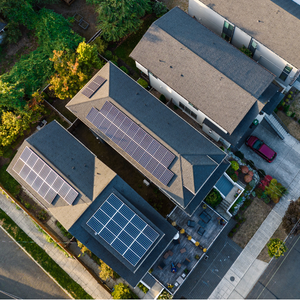
People who don’t understand solar sometimes walk away rather than ask questions. That’s the detail most articles skip. It’s not that solar makes homes harder to sell objectively. It’s that an uninformed buyer gets nervous, and a nervous buyer walks away from the sale.
Before you list, ask yourself: Are you setting your buyer up to understand what they’re actually getting? A one-page summary of the system specs, warranty terms, net metering credits, and average monthly energy savings can do more for your sale than a fresh coat of paint. Informed buyers feel confident. Confident buyers close.
For homeowners in neighborhoods like Eastlake or Maple Leaf in Seattle, or out in Sammamish or Kirkland, solar is basically expected. Buyers in those markets aren’t confused by it. They’re looking for it. In more rural parts of Washington, some buyers are still warming up to the idea, which means more education falls on the seller’s side of the sale.
Owned vs. Leased Solar Panels: How It Changes Your Sale
Solar panels add value. Leased solar panels add complexity. Full stop.
Solar systems can be purchased outright, financed through a solar loan, or arranged through a solar lease or power purchase agreement (PPA). A lease or PPA is a legal contract tied to your property, not to you personally. The buyer steps into that agreement whether they planned on it or not, and some lenders treat it as an encumbrance on the title.
| Factor | Owned System | Leased System / PPA |
|---|---|---|
| Effect on sale price | Adds measurable value | Neutral to negative |
| Lender treatment | Clean title | May flag as an encumbrance. |
| Transfer process | Included in the sale | The buyer must qualify with the solar company |
| Timeline impact | None | 6 to 8 weeks |
| Buyer pool | Broad | Narrowed |
| Documentation needed | Installation contract, warranty, permits, and net metering agreement | Lease or PPA contract, transfer paperwork |
The thing most sellers get wrong is assuming they can just call the solar company and transfer the lease the week before closing. These processes take 6 to 8 weeks and require the buyer to qualify with the solar company separately. A slow approval can delay your entire closing date. Start early, disclose the lease in your initial marketing materials, and price accordingly. A leased system narrows your buyer pool, and knowing that upfront lets you manage it rather than be surprised by it. If you need to move on your timeline regardless, we buy houses in Washington and can work around lease complications that slow down a conventional sale.
Selling with Owned Solar Panels: What to Have Ready
Owned systems are the cleaner path, but they still come with homework. If you paid cash or paid off a solar loan, you hold a clear title to the system. A buyer’s lender won’t flag it, and the appraisal can assign it a value.
Pull together your paperwork before you list:
- Original installation contract (confirms system size, installer, and equipment specs)
- Warranty documentation (most quality panels carry a 25-year performance warranty)
- Permits pulled with your city or county (proof that the system was installed to code)
- Net metering agreement with your utility (shows the credit structure a buyer is inheriting)
- Production history from your solar monitoring app or utility account (buyers want to see actual kilowatt-hour output, not just manufacturer estimates)
- Solar technician certification if the system is more than ten years old (undocumented older systems have stalled more than a few deals)
A buyer’s agent will ask for these during due diligence, and being ready with the full package builds trust fast.
Washington’s net metering programs run through utilities, including Clark PUD, Puget Sound Energy, and Seattle City Light. If your system has accrued net metering credits, those credits don’t automatically transfer to the new owner. Talk to your utility early about what happens to any banked credit balance at the time of sale.
One pattern worth flagging: sellers who installed solar through a loan that’s still being paid off. That loan may be tied to the property through a UCC-1 filing, which puts it on the title. A buyer’s title company will catch this, so disclose it upfront and get a realistic read on how the remaining balance affects your net proceeds before you set your asking price.
Can You Take Solar Panels with You When You Move Out of Washington?
Technically, maybe. Practically, you probably don’t want to.
Removing solar panels means pulling permits, patching roof penetrations, and potentially re-roofing around the mounting hardware, then reinstalling at the new property with new permits, new wiring inspections, and potentially a new inverter. The cost of removal and reinstallation often exceeds what you’d save by taking them.
In Washington real estate, solar panels installed on a home are generally treated as fixtures, meaning they’re part of the property by default unless you explicitly carve them out in writing before the listing goes live. If you list the house and a buyer makes an offer expecting the panels, removing them afterward becomes a breach issue. Sellers who want to take their system must note it clearly in the listing from day one.
Getting Your Washington Home Ready to Sell with Solar Panels
Daniel Mitchell called on a Tuesday from his place in Lacey with a problem: a contractor had given him an estimate to upgrade his electrical panel, citing compatibility issues with the solar system. The quote was nearly as much as his kitchen renovation had cost.
When we walked through the system, what we found was straightforward. His solar setup was fine. The electrical panel upgrade was a nice-to-have, not a deal-breaker. Framing it as a credit to the buyer at closing was a smarter move than spending money he didn’t need to spend.
Get the roof inspected before you list. A buyer will order one anyway, and knowing the condition yourself gives you time to address anything without pressure. Most buyers can absorb a minor roof issue priced into the sale. What they can’t absorb is finding out about it for the first time during inspection, three weeks before closing. For sellers in the South Sound area, carrying repair costs through a drawn-out listing process is often the worst outcome. If that’s your situation, it’s worth looking at what it means to sell your house fast in Lakewood, WA.
Frequently Asked Questions
Is it hard to sell your house if you have solar panels?
Generally not, and in markets like Seattle and Bellevue, it can make your home more competitive. The difficulty comes when buyers don’t understand the system or when a lease or PPA complicates the transfer. Owned panels with documentation in order are a genuine asset to most buyers.
What happens to net metering credits when I sell?
Credits don’t automatically transfer to the new owner. The specifics depend on your utility. PSE, Seattle City Light, and Clark PUD each handle it slightly differently. Contact your utility before closing to understand what happens to any banked balance and whether any credits can be applied to your final bill.
Can I remove my solar panels when I sell my house in Washington?
You can, but it’s rarely worth it financially. Removal, roof repair, and reinstallation costs add up quickly. More importantly, panels on a listed home are treated as fixtures under Washington real estate practice. If you plan to take them, that has to be in the listing from the start.
Is it harder to sell a home with a solar lease?
Yes. A lease or PPA requires the buyer to qualify with the solar company, the transfer takes weeks, and some lenders treat it as an encumbrance on the title. It’s manageable, but it narrows your buyer pool and requires more lead time. Going into the sale knowing this lets you price and market accordingly.
If you have a home with solar panels in Washington and want a clear picture of what your situation means for a sale, contact us. From the Eastside to the South Sound, we buy houses in Kirkland and the cities around it. Most sellers are in a stronger position than they think. The details are what make the difference, and those are worth knowing before you list, not after.
Helpful Washington Blog Articles
- How to Sell a House without A Realtor in Washington
- How to Sell a House in Foreclosure in Washington
- Selling a House during Divorce in Washington
- Selling a Probate House in Washington
- Selling a House With Water Damage in Washington
- Selling Your Washington Home with Code Violations
- Can You Sell a House With Asbestos in Washington
- Who Pays Closing Costs When Selling a House in Washington
- Can You Sell A House With A Lien In Washington
- Selling a House That Needs Repairs in Washington
- Cost of Selling a House in Washington
- Capital Gains Tax on Real Estate in Washington
- How Does Selling a House With a Mortgage Work in Washington
- Selling A House With Solar Panels In Washington
- How To File A Quitclaim Deed In Washington