
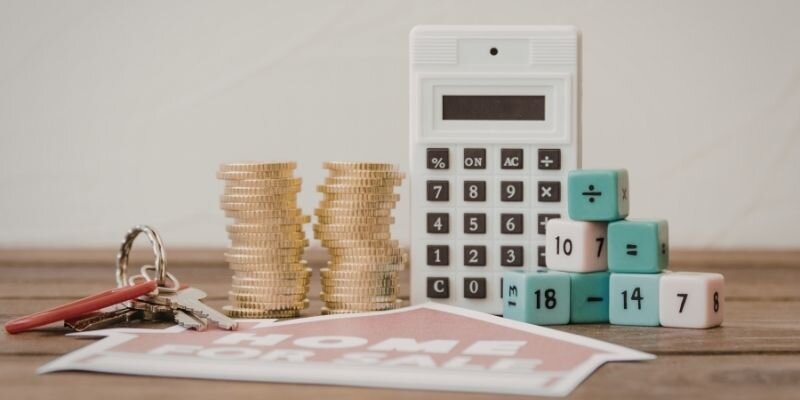
Ever wondered how much it truly costs to sell a home in the Evergreen State? You are not alone. Most homeowners focus on the final sale price, but they frequently neglect the expenses that can diminish their profits.
I’ve been buying houses in Washington for years, from the tech districts of Redmond to the waterfront suburbs of Tacoma, and I’ve seen plenty of sellers be surprised by prices they didn’t anticipate.
The reality is that seller closing fees in Washington average at 3.62% of the house sale price, but that’s just the beginning. You have real estate fees, the state’s specific excise tax, repairs, staging, and a slew of other costs that can quickly add up to tens of thousands.
I’ll walk you through every single expenditure you may incur while selling your Washington house. From marketing your home to concluding the transaction, all information is clear and uncomplicated.
Washington State Home Selling Costs and Fees Breakdown

Start with the larger picture. Due to real estate agency commissions and the state’s Real Estate Excise Tax, closing costs for sellers average 6% to 8% of the home’s sale price. Seller closing fees on a $700,000 home can reach $42,000–$56,000.
This matters most in King County, where the median sale price was $845,000 in August 2026, down 3.4% from $875,000 a year earlier. On an $800,000 home, selling costs run $48,000 to $64,000.
However, most people are unaware that these percentages change greatly depending on their situation. Spokane beginning homes and Bellevue luxury homes have different cost structures. Market circumstances matter. In a hot seller’s market, little repairs and staging may work. Staying competitive in a buyer’s market requires more upfront investment.
Real estate fees, Washington’s Real Estate Excise Tax, and pre-sale upgrades are frequently your highest expenses. While important, everything else is generally minor line items that build up over time.
Too many sellers underestimate these expenditures and scramble after closing. One of our Kirkland sellers expected to walk away with about $150,000 once the mortgage was paid off. After every cost came out, the number was closer to $112,000. The house sold for what they hoped it would. The costs were the part they had not counted on.
Real Estate Professional Commission Rates in Washington
Expert commissions are the elephant in the room. This is usually your highest-selling expense. The average closing realtor costs in Washington are 5.90% of the home’s sale price. Realtor fees are $26,550 for a $450,000 home and $53,690 for a $910,000 home.
A median $800K King County property will cost $47,200 in commissions. Yes, actual money.
This is when things become interesting. The real estate industry changed drastically in 2024. The National Association of Realtors updated real estate professional practices after a lawsuit. Buyer’s experts must sign an “agency agreement” before serving buyers starting in August 2024. The expert’s services and pay must be specified in this agreement.
Meaning for you? Real estate professionals no longer divide commissions automatically. Listing experts used to charge sellers 6% and divide it among the buyers’ experts. Now, buyer’s representatives negotiate their pay with buyers.
However, most listing experts propose covering the buyer’s expert commission. Sellers are not compelled to do so, but buyers’ experts rarely show property without pay.
Non-fixed commission rates. Washington has no set rate, they can be negotiated. Sellers should discuss fees and services before listing. In high-end communities like Mercer Island or Medina, experts may take lower percentage rates because the dollar amount is considerable. Smaller markets have less space for negotiation.
Experts have justified their commission by helping sellers sell for more. The National Association of REALTORS reports that FSBO homes sell for less than expert-listed ones. In the 2025 profile, the median FSBO home sold for $360,000 against $425,000 for agent-assisted sales. Sellers who skip the commission often give up more than they save.
Finding a fee-earning expert is crucial. Find someone with local market expertise, a great marketing strategy, and negotiation experience. In competitive markets like Seattle or Bellevue, the proper expert can make the difference between a rapid, full-price sale and a months-long listing. If you would rather skip the commission conversation altogether, we buy houses in Seattle for cash and close on your schedule.
Sell your home for cash in Washington without commissions and enjoy a fast, fair, and simple process.
Property Transfer Tax Requirements in Washington State
Washington’s Real Estate Excise Tax (REET) is unique. Every seller pays this state-level transfer tax, which might be high. A tiered REET tax scale from 1.1% to 3.0% is used in the state, depending on property value.
How the graduated scale works. Taxes are 1.1% on the selling price up to $525,000, 1.28% on $525,000 to $1.525 million, and higher for higher-priced properties.
That $800K King County median home costs:
First $525,000 x 1.1% = $5,775
Remaining $275,000 x 1.28% = $3,520
Total REET: $9,295
Nearly $10,000 in state excise tax. REET alone on a million-dollar property comes to about $11,900.
Still more. Local REETs are added to the state tax in most counties and towns. That can add $3,800+ on an $800K home at an average local REET rate of 0.479%.
The buyer may be liable for unpaid real estate excise taxes, but the seller usually pays them. Negotiations rarely escape this penalty.
The Washington State Department of Revenue resets the REET brackets periodically. On January 1, 2027, the thresholds move up to $551,000, $1,551,000, and $3,051,000, while the rates stay at 1.1% through 3.0%. If your sale price sits near one of those lines, your closing date can change what you owe.
This can significantly affect your luxury property sale proceeds. Current REET rates should be considered when pricing and calculating sales revenue.
Home Inspection and Repair Costs Before Selling

Smart sellers seek pre-listing inspections to avoid inspection difficulties. Washington house inspections run $300 to $600, and that small outlay can save you thousands in negotiations. Additional inspections, such as pest or radon checks, may boost costs.
Too many sales have fallen apart or required big price cuts because sellers were surprised by inspection results. Knowing issues ahead of time lets you fix or price them. When sellers are proactive about maintenance, buyers feel more confident.
Common Washington inspection repairs include:
The state’s damp climate makes roof problems widespread. Shingle damage, clogged gutters, and poor drainage cost $2,000–$15,000. Washington buyers are alert to roof concerns because of water damage concerns.
Electrical systems in older homes typically need updating. Modifying panels, installing GFCI outlets, and fixing code violations cost $1,500–$5,000. This is typical in pre-1990 dwellings.
Minor leaks to serious sewage line troubles are plumbing issues. Normal repairs cost $500–$3,000, but sewer line replacement can cost $10,000.
Old or poorly maintained HVAC systems can also be a decisive drawback. Maintenance and minor repairs typically cost $300-$800, while full system replacement runs about $5,000-$15,000. Although Washington’s climate is mild, buyers still expect reliable, energy-efficient heating.
Foundation and structural difficulties are most critical. Major structural issues can cost over $15,000, while minor settlement costs $2,000 to $5,000.
Focus on safety and major upkeep, but don’t overinvest in cosmetic changes unless they affect buyer interest. Buyers often make cosmetic adjustments after purchasing.
Offer repair credits instead of doing all the work. This gives buyers flexibility and addresses their concerns. Make sure credits are based on actual contractor estimates to avoid overcompensating.
At Highest Offer Real Estate, we buy houses in Tacoma and the surrounding areas, making it easy for homeowners to sell quickly and hassle-free.
Staging and Marketing Expenses for Washington Properties
Staging may make or break a sale in competitive Seattle or Bellevue markets. Professional staging costs $2,000–$5,000 for a full home or $500–$1,500 per room.
Vacant properties usually benefit from staging. Empty rooms can feel smaller, and purchasers may struggle to imagine their purpose. Staged homes sell 73% faster and for 5%–10% more.
Consider partial staging for the living room, main bedroom, and dining room if your home is occupied. This method is cheaper than complete staging yet still impresses purchasers.
While achievable, DIY staging is tricky. Professional stagers know design trends, space maximization, and consumer demographics. They also have photogenic furnishings and décor.
Marketing costs beyond photography include:
- Premium listings on Zillow, Realtor.com, and others: $100 to $500
- Professional fliers and signs: $200 to $500
- Open house food, flowers, and similar touches: $100 to $300 per event
- Print ads in local magazines: $500 to $2,000
High-end properties need social media marketing more. Some experts charge $300–$1,000 for premium social media marketing.
Most full-service experts include basic marketing in their commission, but premium services cost more. You should specify what’s included upfront to avoid surprises.
If staging and repairs are more than you want to take on, cash home buyers in Bellevue, like us, will buy the house exactly as it stands. Luxury areas like Medina and Hunts Point have higher staging and marketing charges. These buyers want sophisticated presentation and fierce competition. The correct market might provide a far higher sale price for a $5,000 staging investment.
Survey and Appraisal Fees During Sale Process
Transaction type and location determine survey requirements. A conventional residential property survey costs $400–$800. Larger or irregularly shaped parcels can run $2,000 or more.
Washington home sales rarely require fresh surveys unless there are boundary disputes, easement difficulties, or the buyer’s lender requires one. If you’ve made modifications near property lines or have unclear boundaries, a survey may be needed.
The buyer pays for the appraisal as part of their financing, although sellers may seek one for pricing recommendations. On a mortgage application, the lender will normally request an appraisal to assess the property’s worth. Home appraisals in Washington cost $400 to $700, depending on location and size.
The buyer’s low appraisal can make talks tough. The buyer may ask for a price reduction to match the appraised value or walk away if financing fails. Before listing, some sellers seek their own appraisal to limit risk.
Sometimes cash purchasers waive appraisal contingencies in competitive markets, eliminating this difficulty. A lender-approved appraisal is still required for most financed buyers.
Appraisals are typically not necessary when selling to a cash buyer, such as Highest Offer Real Estate, as there is no financing involved. This can streamline the process and remove one potential impediment to closing.
Attorney Fees and Legal Expenses During Home Sales
Different states have different real estate attorney requirements. An attorney for real estate is optional in Washington. In complex transactions, it may be wise to get one even if the state doesn’t.
Many residential sales don’t require an attorney, but others do. You may need one for short sales, property line disputes, and title concerns. Real estate attorneys in Washington charge $361 per hour.
Attorneys may be needed in:
- Complex divorce sales or owner distribution
- Multi-heir estate sales
- Encumbered, lien-ridden, or title-failed properties
- Business or investment property
- Seller financing or complicated contracts
Your realtor and title firm manage legal and administrative details for most residential sales. Title companies handle closings, paperwork preparation, and title clearance.
If you’re unsure about any portion of the sale or if something strange happens, a real estate attorney can help. Minimal legal fees can prevent costly blunders.
Especially when purchasers want unique terms or contingencies, sellers may have an attorney evaluate purchase agreements. This is typical in high-value or out-of-state transactions.
Title Insurance and Escrow Fees for Washington Home Sales
Title insurance and escrow are crucial to Washington real estate transactions. Costs on that side of the ledger cover title insurance, escrow handling, government recording, and lender processing.
WA sellers usually pay for the new owner’s title insurance to protect against title and ownership disputes. On an $800K home, owner’s title insurance costs 0.5% to 1%.
Funds are usually held in escrow during closing. Managing this account costs the buyer and seller, usually divided. Dependent on transaction complexity and home value, escrow costs are $500–$2,000.
Title companies are crucial. They check property ownership, liens, encumbrances, closing paperwork, and legality. Depending on the transaction, this service costs $800–$1,500.
Some buyers want sellers to pay for borrower and owner title insurance. The mortgage lender pays $300–$800 for title insurance. It depends on market conditions and bargaining leverage whether you cover this.
Recording deeds and supporting documentation costs $150 to $250. Usually split between buyer and seller or paid by the seller during closing.
Address title concerns early to avoid a selling delay. Liens, easement conflicts, and document errors are common issues. While reviewing, the title company finds problems, but fixing them might take time and money.
Title and escrow costs are generally covered by cash buyers and direct purchase companies, simplifying the procedure for sellers.
Closing Costs Breakdown for Sellers in Washington

Let’s tie it all together with a real-world example. Here’s what you may anticipate paying for a $800,000 house sale in King County:
Real estate commissions totaled $47,200 (5.9%)
State REET is $9,295 (graduation rate)
Local REET is $3,832 (0.479% average)
Title insurance costs $4,800 (0.6% of the sales price)
Escrow fees are $1,200 (split with the buyer)
Recording fees: $200
Property tax proration: $2,300 (varies based on closing date)
Pre-sale improvements totaled $8,000 (kitchen and bathroom renovations)
Professional Photography costs $400
Staging costs $3,000 (half staging)
Pest inspection and treatment cost $600
Miscellaneous (signage, etc.) costs $500
Total: $81,327
That’s more than $81,000 in total costs, or around 10.2% of the sale price. That lands above the 6% to 8% closing cost range because it also folds in pre-sale improvements, staging, photography, and tax proration, which are selling costs rather than closing costs. Your net revenues would be around $718,673 before paying off any current mortgages.
These figures will change depending on your individual situation, market conditions, and the modifications you decide to make. Luxury residences may have more staging and marketing costs than lower-priced homes.
The idea is to budget for these fees ahead of time so that you can properly price your home and avoid unpleasant surprises at closing.
Hidden Costs and Unexpected Expenses Selling
Even with careful planning, unforeseen costs can develop throughout the sale. Here are some to watch out for:
- Last-minute fixes found after the final walkthrough: $500 to $5,000
- Buyer concessions negotiated during contract: 1% to 3% of the purchase price
- Extended holding expenses if the sale takes longer than expected: $1,000 to $3,000 a month
- Price reductions to tempt buyers in a stagnant market, which vary widely
- Extra marketing spend if the original listing expires and has to run again
Redfin put the share of U.S. sellers giving concessions at 46% in May 2026, the highest on record for that month. In Washington, seller concessions have recently averaged roughly 2% of the sale price (for example, about $10,000 on a $500,000 home) and tend to be in the form of closing cost refunds or price reductions.
These expenses can vary considerably depending on market conditions. In a hot seller’s market, you may not have to make any concessions at all. In a buyer’s market, you may have to give credits, pay the buyer’s closing expenses, or lower your price.
Interest rate buydowns are becoming more prevalent. One example of this is the seller paying for a buy-down of the buyer’s mortgage interest rate. It can be $8,000 to buy down the rate by 1%. That can help make a listing more desirable when borrowing rates are high, and is really another sort of closing credit.
The trick is to provide some wiggle room in your budget for unforeseen expenses. A rule of thumb is to add another 1% to 2% of the selling price for surprises.
Companies like Highest Offer Real Estate can eliminate uncertainty by buying assets directly, which has fewer contingencies and shorter closing deadlines than typical transactions. Contact Us to learn more.
Frequently Asked Questions
How Much Are Closing Costs in WA for a Seller?
Washington seller closing costs average 3.62% of the home transaction price, excluding real estate commissions. Including fees, selling costs average 6% to 8% of your home’s sale price. Costs range from $48,000 to $64,000 for an $800,000 property.
How Much Are Closing Costs on a $400,000 Home?
Selling costs for a $400,000 Washington home usually land between $34,000 and $35,500. That covers $23,600 in real estate commissions (5.9% average), $4,400 in state REET, $1,916 in local REET, $2,400 in title insurance, and $2,000–$3,000 in additional costs.
What Is the 3 3 3 Rule in Real Estate?
The 3 3 3 rule is a timing guide. Buyers and agents already watching your price range and area are most active in the first three days after the listing goes live. Consider changing your price or marketing strategy after three weeks if you haven’t received satisfactory offers. Significant price reductions are frequently needed after three months to revive interest.
What Is the Hardest Month to Sell a House?
December is Washington’s hardest month to sell a house. Slow due to holiday diversions, terrible weather, and fewer buyers searching. Post-holiday finances and winter weather make January and February difficult. Washington sells best in May–September when the weather is good, and families move during summer break.
Selling a house in Washington has considerable expenditures, but recognizing them ahead of time allows you to make informed decisions and avoid surprises. Real estate fees and state excise taxes, as well as staging and repairs, can easily account for 8% to 10% of the transaction price.
The key is to work with seasoned professionals who understand the local market and can guide you through the process effectively. When deciding whether to list with a traditional agency or sell directly to Highest Offer Real Estate, it’s important to consider all costs.
If you wish to discuss your alternatives, we are here. There’s no pressure or commitment. Before deciding how to proceed, it can be beneficial to gain a clear image of the situation.
Helpful Washington Blog Articles
- How to Sell a House without A Realtor in Washington
- How to Sell a House in Foreclosure in Washington
- Selling a House during Divorce in Washington
- Selling a Probate House in Washington
- Selling a House With Water Damage in Washington
- Selling Your Washington Home with Code Violations
- Can You Sell a House With Asbestos in Washington
- Who Pays Closing Costs When Selling a House in Washington
- Can You Sell A House With A Lien In Washington
- Selling a House That Needs Repairs in Washington
- Cost of Selling a House in Washington
- Capital Gains Tax on Real Estate in Washington
- How Does Selling a House With a Mortgage Work in Washington
- Selling A House With Solar Panels In Washington
- How To File A Quitclaim Deed In Washington